What Is Grace in the Bible? Understanding God's Unmerited Favor
Explore the profound meaning of grace in the Bible. Learn how God's unmerited favor transforms lives, brings salvation, and empowers believers to live in freedom.

When we ask the question, 'what is grace in the Bible?', we are stepping into the very heart of the Christian faith. Grace is the golden thread that weaves through every book of Scripture, from the garden in Genesis to the final 'Amen' in the book of Revelation. It is perhaps the most beautiful word in the human language, representing a love that is as radical as it is relentless.
At its core, grace is often defined as 'unmerited favor.' It is the kindness of God extended to those who have no claim upon it and no way to earn it. In a world built on the 'transactional'—where you get what you pay for and earn what you work for—the biblical concept of grace stands as a revolutionary alternative. It is God reaching down to humanity when humanity could not reach up to God.
Understanding what grace is in the Bible is more than just an intellectual exercise; it is a life-altering realization. When we truly grasp that our standing with God depends not on our performance but on His character, our lives are transformed from ones of anxious striving to ones of peaceful rest and joyous obedience.
The Biblical Definition of Grace
To understand what is grace in the Bible, we must look at the original languages. In the Old Testament, the Hebrew word 'chen' refers to favor or kindness shown by a superior to an inferior. In the New Testament, the Greek word is 'charis', which denotes a gift, a blessing, or a favor that brings joy. It is where we get the word 'charity.' It is a gift given out of the bounty of the giver’s heart, regardless of the recipient’s merit.
Grace is distinct from mercy, though they are two sides of the same coin. Mercy is God withholding the punishment we rightfully deserve (lamentations 3:22). Grace, however, goes a step further: it is God giving us the blessings and standing that we could never deserve. If mercy is a judge choosing not to imprison a guilty man, grace is that same judge taking the man home and adopting him as his own son.
Salvation: The Gift of Grace Through Faith
The most famous explanation of what is grace in the Bible is found in Ephesians 2:8-9: 'For by grace you have been saved through faith. And this is not your own doing; it is the gift of God, not a result of works, so that no one may boast.' These verses encapsulate the 'Sola Gratia' (Grace Alone) foundation of the Reformation. Salvation is not a ladder we climb; it is a gift we receive.
Because of our fallen nature, we are spiritually bankrupt and unable to pay the debt of our sins. Romans 3:24 reminds us that we are 'justified by his grace as a gift, through the redemption that is in Christ Jesus.' This mean that our 'right standing' before God is a finished work accomplished by Jesus on the cross and credited to our account the moment we believe. It is entirely unearned and entirely sufficient.
The Power of Transforming Grace
A common misconception is that grace is only about the 'entry point' into the Christian life—getting saved. However, in the Bible, grace is also a dynamic power that enables us to live the life God calls us to. Titus 2:11-12 explains this beautifully: 'For the grace of God has appeared... training us to renounce ungodliness and worldly passions, and to live self-controlled, upright, and godly lives.'
Grace is not a license to continue in sin; it is the very thing that empowers us to leave it behind. When we realize the depth of God's love for us, our motivation for holiness changes. We no longer obey out of a fearful desire to avoid punishment, but out of a grateful desire to please the One who loved us first. Grace doesn't just change our destination; it changes our desires.
Common Grace vs. Saving Grace
Theologians often distinguish between 'common grace' and 'saving grace.' Common grace is the goodness of God shown to all of creation, regardless of faith. Jesus mentions this in Matthew 5:45, noting that God 'makes his sun rise on the evil and on the good, and sends rain on the just and on the unjust.' Every sunset, every breath, and every moment of human kindness is a manifestation of this general grace.
Saving grace, however, is specific and redemptive. It is the particular work of the Holy Spirit that draws a person to Christ, grants them repentance, and seals them for eternity. While everyone experiences the common grace of God's providence, saving grace is the intimate, covenantal love of God that restores our relationship with Him and transforms our eternal destiny.
Finding Grace in Times of Suffering
One of the most practical applications of what grace is in the Bible appears in 2 Corinthians 12. The Apostle Paul struggled with a 'thorn in the flesh' and begged God to remove it. God’s response was not to remove the trial, but to give more grace: 'My grace is sufficient for you, for my power is made perfect in weakness' (2 Corinthians 12:9).
This reveals that grace is also God's sustaining strength. When we reach the end of our own resources—be it through illness, grief, or exhaustion—grace is the divine energy that carries us through. It means that we don't have to be 'strong enough' for our circumstances because Christ’s strength is available to us. Grace is the comfort that finds us in the valley and the hope that sustains us in the dark.
Living as a People of Grace
Because we have been the recipients of such immense grace, we are called to be conduits of grace to others. Colossians 4:6 instructs us, 'Let your speech always be gracious, seasoned with salt.' Our interactions with our spouses, children, coworkers, and even our enemies should reflect the unmerited favor we ourselves have received.
Extending grace to others often means forgiving those who don't deserve it and showing kindness to those who haven't earned it. This is perhaps the hardest part of the Christian walk, yet it is the most powerful witness to the world. When we forgive as we have been forgiven (Ephesians 4:32), we show the world a glimpse of the heart of God. Grace-filled living is the natural response to a grace-filled God.
Grace Is Personified in Jesus Christ
Ultimately, if you want to see what is grace in the Bible, you must look at Jesus. John 1:14 tells us that the Word became flesh and dwelt among us, 'full of grace and truth.' Jesus did not just talk about grace; He was grace in human form. From the way He treated the woman at the well to His final prayer on the cross, His life was an uninterrupted display of favor toward the broken.
Jesus is the fountain from which all grace flows. John 1:16 adds, 'For from his fullness we have all received, grace upon grace.' This 'grace upon grace' suggests an inexhaustible supply. Like the waves of the ocean that never stop hitting the shore, God’s grace toward His children is constant, overwhelming, and never runs dry. To know Jesus is to know grace.
Final Thoughts
Grace is not merely a theological concept to be studied but a person to be known. In Jesus Christ, the grace of God has appeared to all people, offering a way out of the cycle of performance and into a life of rest. As you reflect on what grace is in the Bible, allow it to penetrate the areas where you feel most unworthy, remembering that God’s favor is not a reward for the righteous, but a gift for the repentant.
Embracing grace means waking up every morning knowing that you are loved not for what you do, but for whose you are. May this 'unmerited favor' empower you to live boldly, serve joyfully, and extend the same radical kindness to others that the Father has so lavishly poured out upon you through His Son.
Continue your study with our companion guide: What Does the Bible Say About Death? Hope Beyond the Grave.
Frequently Asked Questions
What is the simplest definition of grace in the Bible?
The most common definition of grace is 'unmerited favor.' While justice is getting what we deserve (punishment for sin) and mercy is not getting what we deserve (judgment), grace is getting what we do not deserve (blessing, adoption, and eternal life). It is the kindness of God toward the underserving.
Does grace mean I can keep sinning since I'm forgiven?
No. In Romans 6:1-2, the Apostle Paul asks this exact question and answers with a resounding 'By no means!' True grace doesn't provide a license to sin; rather, it provides the heart-transformation and power to overcome sin. When we truly experience God's love, we naturally desire to please Him.
How do I distinguish between grace and legalism?
Legalism is the attempt to gain God's favor or maintain salvation through human effort and rule-keeping. Grace is the opposite; it recognizes that our standing before God is based entirely on Christ's finished work on the cross. Legalism says 'I obey so I am accepted,' while grace says 'I am accepted, therefore I obey.'
How can I practically 'grow in grace' daily?
The 'Throne of Grace' mentioned in Hebrews 4:16 is the invitation for believers to pray with confidence. Because Jesus is our High Priest, we don't have to approach God in fear or shame. We can come boldly to find help, strength, and mercy in our moments of greatest need.
Newsletter
Get weekly encouragement in your inbox
Join our newsletter for new Bible studies, prayer guides, and devotionals — every Sunday. No spam, unsubscribe anytime.
We respect your privacy. Read our privacy policy.
Related Articles
More from Bible Study and across Faithful Today Info.
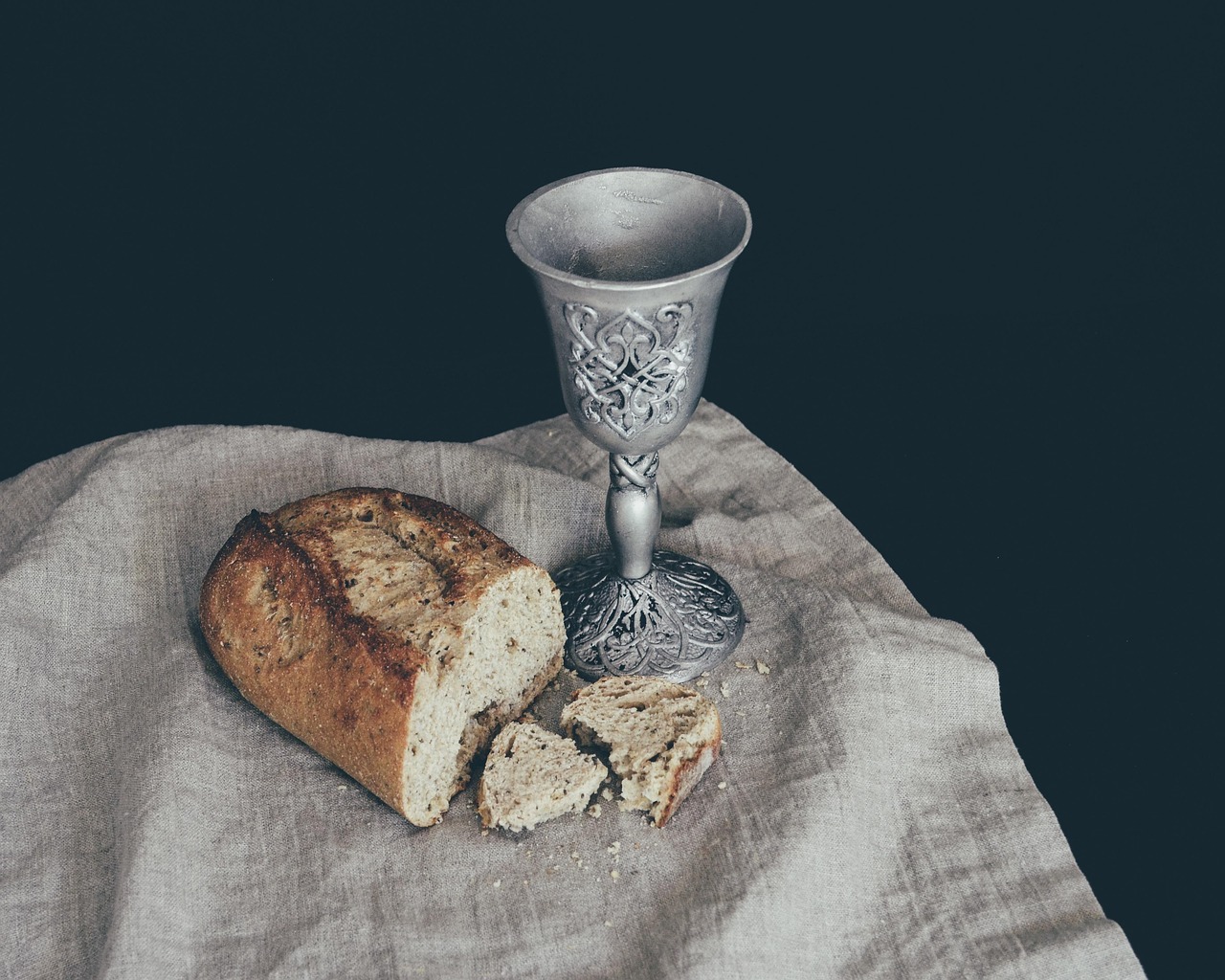
Explore the deep biblical meaning of the Lord's Supper. Discover what is communion, its historical roots, and how this sacred meal connects us to Christ and the Church.

Explore the biblical perspective on death, the promise of the resurrection, and the hope we have in Jesus Christ. Understand why death is not the end for those in Him.

Discover the profound meaning of the 9 fruits of the Holy Spirit found in Galatians 5. Learn how to cultivate love, joy, peace, and more through a verse-by-verse study designed for daily Christian living.