What Does the Bible Say About Death? Hope Beyond the Grave
Explore the biblical perspective on death, the promise of the resurrection, and the hope we have in Jesus Christ. Understand why death is not the end for those in Him.

Few subjects carry as much weight, mystery, and natural apprehension as the end of our earthly lives. We often avoid the topic in polite conversation, yet it is the one experience that unites every human being across history. When we ask, 'what does the bible say about death?', we aren't just looking for clinical definitions; we are searching for hope, meaning, and a reason to look at the horizon without fear.
The Bible does not shy away from the harsh reality of death. It calls it an 'enemy,' yet it also speaks of a victory so complete that the sting of the grave is swallowed up forever. For the believer, death is not a brick wall; it is a doorway. It is the transition from a world of shadows into the brilliant light of God’s eternal presence.
In this study, we will walk through the scriptures to understand why death exists, what happens when we breathe our last, and the glorious promise of the resurrection. Whether you are wrestling with your own mortality or walking through the valley of the shadow of death with a loved one, there is a profound peace waiting for you in the Word of God.
The Origin of Death: Why Do We Die?
To understand the biblical perspective on death, we have to look back to the beginning. The Bible teaches that death was not part of God’s original design for humanity. In the Garden of Eden, life was the standard. However, when sin entered the world through disobedience, death followed as a natural and spiritual consequence. Genesis 3:19 reminds us of our physical frailty: 'For dust you are, and to dust you shall return.'
This is why death feels so 'wrong' to us. We were created for eternity, and the separation of the soul from the body feels like a violent interruption of our design. When we ask what does the bible say about death, we first discover that it is an intruder—a result of the Fall that God intended to rectify from the moment it began.
Death as a Defeated Enemy
While the Old Testament often views the grave (Sheol) with a sense of shadow and waiting, the New Testament brings a thunderous declaration of victory. The Apostle Paul writes in 1 Corinthians 15:26 that 'the last enemy to be destroyed is death.' This is a crucial distinction for the Christian: death is an enemy, but it is a defeated one.
Because Jesus Christ walked out of the tomb on the third day, the nature of death changed for everyone who follows Him. It is no longer a prison, but a passage. The keys to death and Hades are now in the hands of the Savior (Revelation 1:18). This means that for the believer, the power of death is broken. It can take our physical breath, but it cannot touch our eternal life.
The Moment of Transition: To Be With Christ
One of the most comforting aspects of what the Bible says about death is the immediacy of God's presence. There is no long, lonely void for the believer. Paul tells the church in Philippi that his desire is 'to depart and be with Christ, for that is far better' (Philippians 1:23). He didn't expect to wait in a dark vacuum; he expected to be with his Lord instantly.
Similarly, Jesus comforted the thief on the cross with the words, 'Truly, I say to you, today you will be with me in paradise' (Luke 23:43). This gives us immense peace when we stand at the bedside of a dying loved one. The moment their eyes close to this world, they open to the face of Jesus. The 'valley of the shadow of death' is just that—a shadow. And you cannot have a shadow without a light nearby.
The Hope of the Resurrection Body
The Bible’s promise isn’t just for a disembodied spiritual existence in the clouds. The ultimate Christian hope is the resurrection of the body. Just as Jesus rose in a physical, recognizable, yet glorified body, we are promised the same. 1 Corinthians 15:42-44 explains that what is 'sown in corruption' (our earthly bodies) will be 'raised in incorruption.'
This means that every ache, every disability, every disease, and every limitation we face in this life is temporary. When we consider what does the bible say about death, we must look forward to the day when the trumpet sounds and we are changed. We will have bodies suited for eternity—bodies that will never tire, never weep, and never die again.
Practical Steps: Living in Light of Eternity
How should this biblical truth change how we live today? First, it should remove the paralyzing fear of the unknown. When we know where we are going, the journey becomes less daunting. Hebrews 2:15 says that Jesus came to 'deliver all those who through fear of death were subject to lifelong slavery.' We are free to live boldly because we know the end of the story.
Second, this perspective should prioritize our relationships and our mission. If life is a vapor (James 4:14), then every moment is an opportunity to love others and share the hope of Christ. We don't live for this world alone; we live as citizens of a kingdom that is yet to come. This 'eternal mindset' helps us hold loosely to earthly possessions and tightly to the things that last.
Comforting Those Who Grieve
Scripture does not ask us to ignore the pain of loss. In fact, 1 Thessalonians 4:13 tells us that we should not grieve 'as others do who have no hope.' Notice it doesn't say 'do not grieve.' Grief is a holy response to the loss of someone made in the image of God. But for the Christian, that grief is infused with a confident expectation.
We can support one another by pointing back to these promises. We can weep with those who weep, knowing that God Himself will one day wipe away every tear (Revelation 21:4). Our role as a community of faith is to remind each other that 'goodbye' is not forever; it is 'see you soon' in the presence of the King.
The Invitation to Eternal Life
The most important thing the Bible says about death is that we don't have to face it alone or unprepared. The gift of God is eternal life through Jesus Christ (Romans 6:23). This life begins the moment we put our trust in Him. Death is only a threat to those who are separated from the Source of Life.
If you have never made that commitment, the biblical message of hope is an open invitation. Jesus said, 'I am the resurrection and the life. Whoever believes in me, though he die, yet shall he live' (John 11:25). This is the cornerstone of our faith. Death has been swallowed up in victory, and that victory is offered freely to you today.
Final Thoughts
Death is a reality, but for the believer, it is a defeated one. Because Jesus lives, we can face the end of our earthly journey not with a clenched fist or a spirit of terror, but with the quiet confidence of a child going home.
If you are grieving today, take heart. The story doesn't end at the cemetery. The same God who breathed life into the dust at creation has promised to call your name once more, ushering you into a kingdom where death is no more, and joy is everlasting.
Continue your study with our companion guide: The 9 Fruits of the Holy Spirit: Galatians 5 Explained Verse by Verse.
Frequently Asked Questions
What happens the moment a Christian dies?
The Bible describes death as a sleep for the believer (1 Thessalonians 4:13), suggesting a temporary state before the resurrection. However, it also teaches that to be absent from the body is to be present with the Lord (2 Corinthians 5:8), implying an immediate spiritual presence with God.
Is it wrong for a Christian to be afraid of death or to grieve deeply?
God does not expect us to suppress our pain. Even Jesus wept at the tomb of Lazarus (John 11:35). The Bible encourages us to mourn, but to do so with hope, knowing that God is 'close to the brokenhearted' (Psalm 34:18).
Does everyone go to heaven when they die?
The Bible teaches that every person will face judgment. For those who have rejected God's grace, Scripture speaks of a 'second death' or eternal separation from Him. This is why the message of the Gospel is so urgent and vital.
Will we have physical bodies in the afterlife?
Scripture promises that our resurrected bodies will be like Christ's glorious body—imperishable, honorable, and powerful (1 Corinthians 15:42-44). We will no longer suffer from illness, age, or decay.
Newsletter
Get weekly encouragement in your inbox
Join our newsletter for new Bible studies, prayer guides, and devotionals — every Sunday. No spam, unsubscribe anytime.
We respect your privacy. Read our privacy policy.
Related Articles
More from Bible Study and across Faithful Today Info.
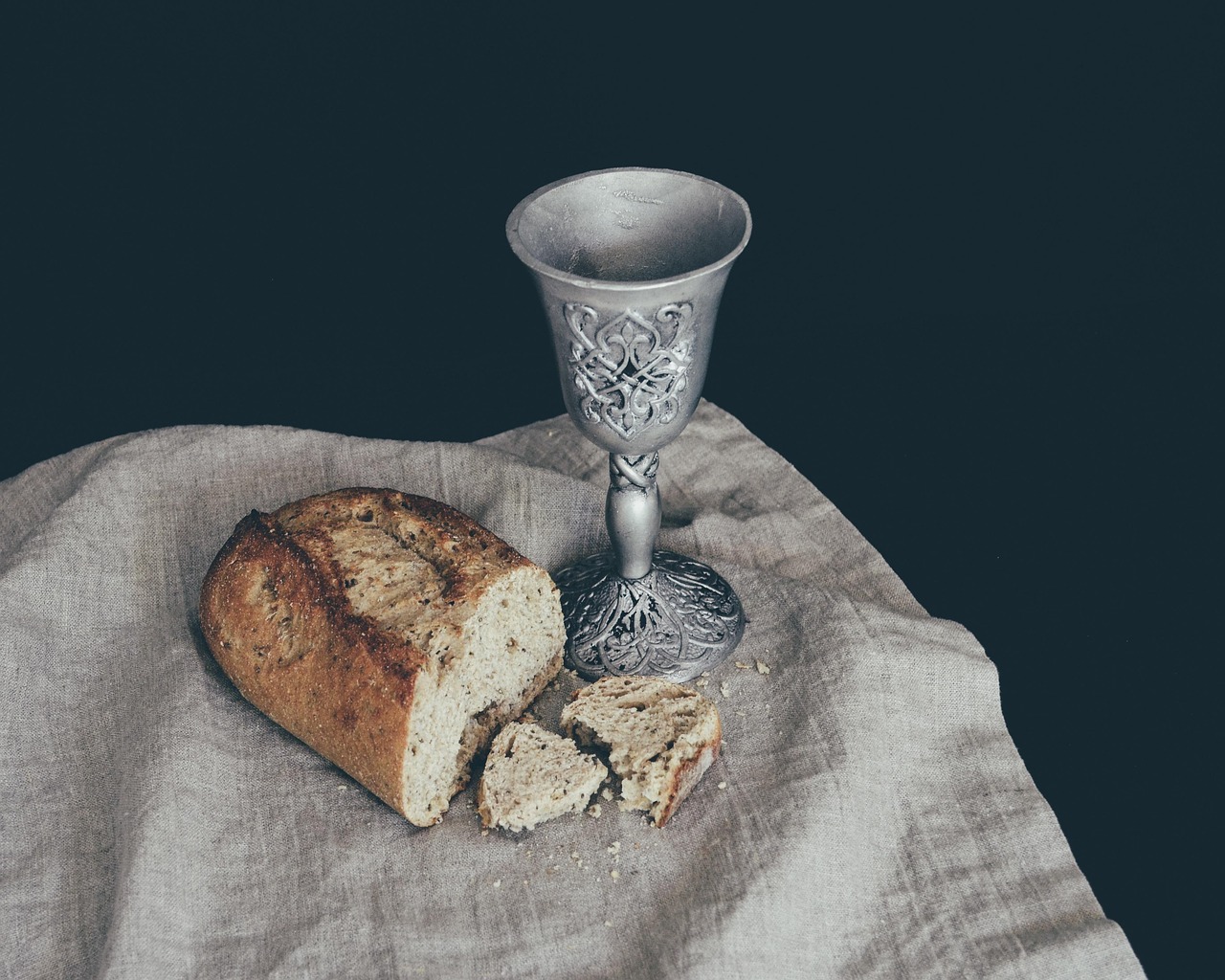
Explore the deep biblical meaning of the Lord's Supper. Discover what is communion, its historical roots, and how this sacred meal connects us to Christ and the Church.

Discover the profound meaning of the 9 fruits of the Holy Spirit found in Galatians 5. Learn how to cultivate love, joy, peace, and more through a verse-by-verse study designed for daily Christian living.

Many see the story of David and Goliath as a simple underdog tale, but the biblical reality is far deeper. Discover how this ancient battle reveals God's sovereignty and our source of true courage.