How to Memorize Bible Verses: 9 Methods That Actually Stick
Discover practical, life-changing ways to hide God's Word in your heart. From the 'First Letter Method' to modern apps, explore 9 methods for how to memorize bible verses that actually stick.
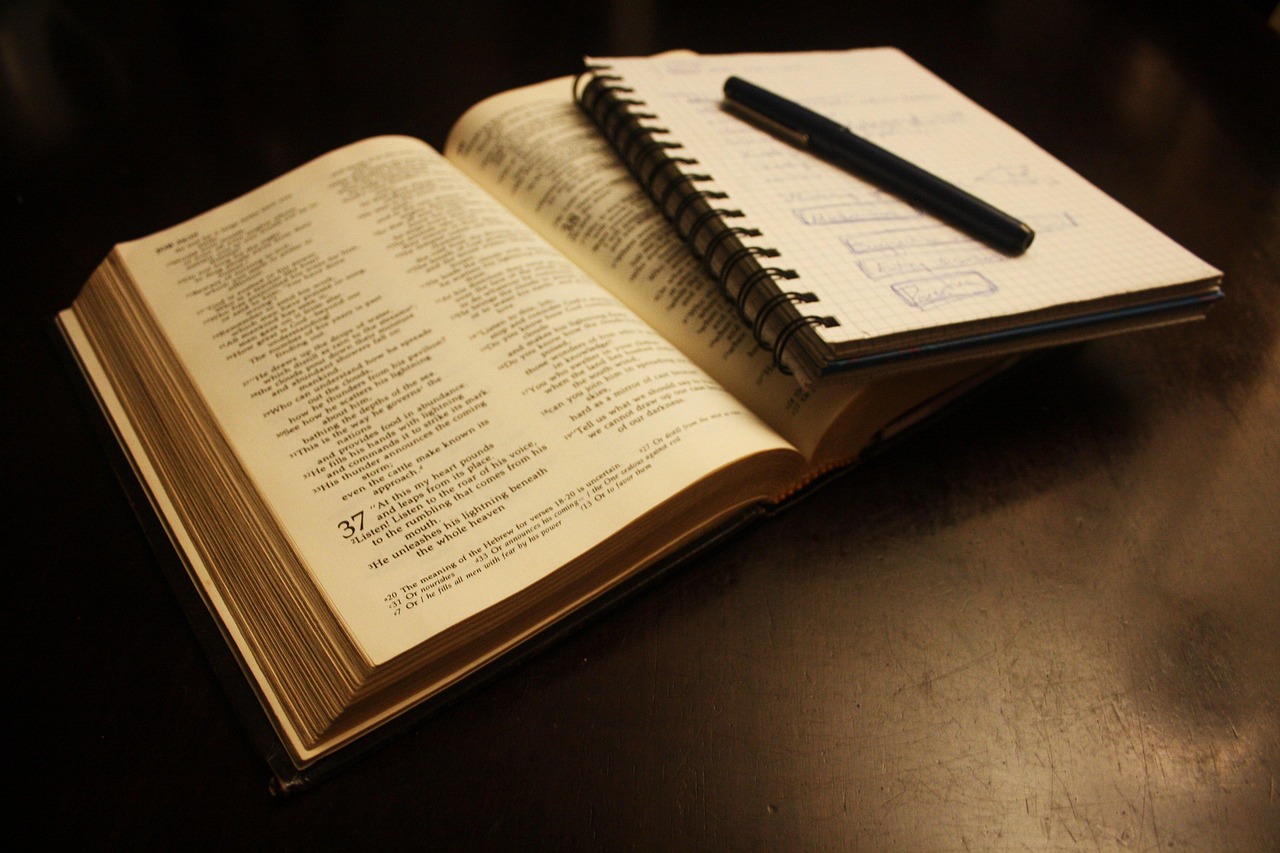
There is a profound comfort that comes from having God’s Word ready on your lips when your heart is heavy or when a friend needs a word of encouragement. We often hear the command to 'hide God's word in our hearts,' but many of us struggle with the practical 'how.' Between busy schedules and the digital noise of modern life, our brains can feel too full to hold onto ancient texts.
However, learning how to memorize bible verses is not just an academic exercise for the intellectually gifted; it is a spiritual discipline available to every believer. When we memorize Scripture, we are following the biblical pattern of meditation, allowing the Holy Spirit to renew our minds (Romans 12:2) and equip us for every good work.
If you have ever felt discouraged by your inability to remember a reference or felt that your memory simply wasn't 'good enough,' this guide is for you. We’ve compiled nine practical, battle-tested methods that cater to different learning styles, ensuring that the truths of the Bible stay with you long after you close your physical Bible.
The Power of the First Letter Method
One of the most effective ways to learn how to memorize bible verses is the 'First Letter Method.' This technique bridges the gap between reading a verse and recalling it from memory. Start by writing out the verse you wish to learn. For example, if you are memorizing Philippians 4:13—'I can do all things through him who strengthens me'—you would write down only the first letter of each word: 'I c d a t t h w s m.'
Look at the string of letters and try to recite the verse. The letters act as 'training wheels' for your brain, providing just enough of a hint to trigger your memory without giving you the whole answer. As you become more confident, cover the letters and try to say it without any help. It’s a simple trick that works wonders for both short verses and longer passages.
Utilize Spaced Repetition and Flashcards
The reason we often forget verses is that we 'cram' them into our short-term memory and then stop reviewing them. To move a verse into long-term storage, you need spaced repetition. This involves reviewing the verse at increasing intervals: once a day for a week, then once a week for a month, then once a month for a year.
Physical flashcards are a classic for a reason. Write the reference on one side (e.g., Psalm 23:1) and the text on the other. Carry these cards with you in your pocket or car. Every time you find yourself waiting in line or at a red light, pull one out. If you prefer a digital approach, apps like Scripture Typer or Anki use algorithms to schedule these reviews for you, making the process of learning how to memorize bible verses nearly automatic.
Engage Your Senses Through Writing and Art
There is a unique connection between the hand and the brain. When you write a verse down, you are processing it more deeply than when you simply read it. Try writing out your target verse ten times every morning for a week. The physical act of forming the letters helps the words 'stick' in your mind.
For those who are more creative, Bible journaling or calligraphy can be a form of meditation. By spending time beautifully lettering a verse like Isaiah 41:10, you are staring at the words, thinking about their shape, and internalizing their meaning. When you try to recall the verse later, you might actually 'see' the artwork you created in your mind’s eye, which triggers the memory of the text.
Sing Your Way to Retention
Have you ever noticed how easily you can remember the lyrics to a song from ten years ago, yet you struggle to remember what you ate for lunch yesterday? Music is a powerful memory aid. Many ministries have set entire chapters of the Bible to music, specifically designed to help children and adults learn how to memorize bible verses.
Look for 'Scripture songs' on streaming platforms. Artists like The Corner Room or Seeds Family Worship set word-for-word Scripture to catchy melodies. If you can’t find a song for a specific verse, make up your own simple tune or chant. It doesn't have to be a masterpiece; the rhythm and melody provide a structural framework that makes the words much harder to forget.
The 'Look, Cover, Write, Check' Technique
This is a staple of traditional education because it works. First, look at the verse and read it aloud three times. Second, cover the verse with your hand or a piece of paper. Third, try to write the verse from memory on a separate sheet. Finally, uncover the verse and check your work.
Use a red pen to circle any mistakes or missing words. This visual 'correction' signals to your brain exactly where the gap in your memory lies. Repeat the process until you can write the verse perfectly three times in a row. This method is particularly helpful for those who need to ensure they are getting every 'the,' 'and,' and 'but' exactly right in their memorization.
Contextual Immersion: Memorizing in Paragraphs
Sometimes, memorizing a single verse is harder than memorizing a small block of text because the single verse lacks a 'story' or a logical flow. If you are struggling with how to memorize bible verses, try expanding your scope to 3-5 verses. Knowing what comes before and after a verse provides a mental 'map.'
For instance, memorizing Romans 8:28 is wonderful, but memorizing verses 28 through 30 gives you a complete theological thought. You begin to see the links between 'called,' 'justified,' and 'glorified.' These logical links act as hooks that help your brain move from one sentence to the next. Context isn't just good for hermeneutics; it's a powerful tool for memory.
The Power of Auditory Learning (Recording Yourself)
If you spend a lot of time commuting or doing household chores, use your voice as a tool. Record yourself reading a passage of Scripture on your phone. Listen to that recording on loop while you drive, wash dishes, or exercise. Hearing your own voice speaking the truth of God's Word has a unique way of sinking into the subconscious.
As you listen, try to speak along with the recording. Eventually, turn the volume down and see if you can stay in sync with your own voice. This 'shadowing' technique is used by language learners worldwide and is incredibly effective for those who learn best by hearing. It transforms mundane tasks into a time of deep spiritual soaking.
The 'Memory Palace' or Locational Method
This is an ancient technique used by orators for centuries. It involves associating parts of a verse with specific locations in a room you know well, like your living room. For example, if you are memorizing the Armor of God in Ephesians 6, you might imagine the 'Belt of Truth' draped over your sofa, the 'Breastplate of Righteousness' hanging over your fireplace, and the 'Shield of Faith' leaning against the door.
As you mentally 'walk' through the room, the visual furniture triggers the memory of the verse. This spatial association is one of the strongest forms of memory our brains possess. By 'placing' God’s Word in your physical environment, you create a mental map that is incredibly difficult to lose. This is a fun and highly effective way to learn how to memorize bible verses that are lists or descriptions.
Accountability and Recitation Partners
We were never meant to walk the Christian life alone, and that includes our study of the Word. Find a 'memory partner'—a spouse, a friend, or a small group member. Commit to learning one verse a week together. Text the verse to each other on Monday, and on Sunday, take turns reciting it to one another.
Knowing that someone is going to ask you to recite the verse provides a healthy level of accountability. Furthermore, hearing your friend recite the verse gives you another opportunity to listen and learn. Colossians 3:16 tells us to 'admonish one another in all wisdom,' and reciting Scripture together is a beautiful way to fulfill that command while sharpening each other's minds.
Final Thoughts
Memorizing Scripture is not a race; it is a relationship. Every verse you tuck away in your heart is a seed planted that will bear fruit in seasons of joy, grief, and testing. Start with just one verse today, and watch how God uses His Word to transform your mind and life.
As you begin this journey, remember the promise of Psalm 119:105: 'Your word is a lamp to my feet and a light to my path.' With these tools and the help of the Holy Spirit, you are well on your way to carrying that light with you wherever you go.
Continue your study with our companion guide: What Does the Bible Say About Death? Hope Beyond the Grave.
Frequently Asked Questions
What is the best Bible translation for memorization?
The best version is usually the one your church uses or the one you find most readable. Many people prefer the ESV, NASB, or NKJV for formal study, but the NIV or NLT are often easier for initial memorization due to their flow. Consistency is more important than the specific version.
How much time should I spend on memorization each day?
Quality is better than quantity. Starting with 15 minutes three times a week is a great goal. The key is 'spaced repetition'—reviewing the verses frequently over a long period rather than 'cramming' for an hour once a week.
Is it better to memorize single verses or entire chapters?
Absolutely! Many people find that memorizing whole chapters or short books (like Philippians or James) is actually easier because of the narrative flow and context. It helps prevent taking verses out of context.
What if I have a bad memory or am older?
Don't be discouraged! Memorization is a muscle that gets stronger with use. Try using auditory methods like recording yourself, or focus on just one short phrase at a time. The goal is heart transformation, not a perfect memory test.
Newsletter
Get weekly encouragement in your inbox
Join our newsletter for new Bible studies, prayer guides, and devotionals — every Sunday. No spam, unsubscribe anytime.
We respect your privacy. Read our privacy policy.
Related Articles
More from Bible Study and across Faithful Today Info.
Explore the deep biblical meaning of the Lord's Supper. Discover what is communion, its historical roots, and how this sacred meal connects us to Christ and the Church.

Explore the biblical perspective on death, the promise of the resurrection, and the hope we have in Jesus Christ. Understand why death is not the end for those in Him.

Discover the profound meaning of the 9 fruits of the Holy Spirit found in Galatians 5. Learn how to cultivate love, joy, peace, and more through a verse-by-verse study designed for daily Christian living.